Why We Don’t Recommend Dripline
What We Are Seeing in the FieldRight as Rain Irrigation is seeing a significant increase in call-outs involving failed, damaged and underperforming dripline systems.
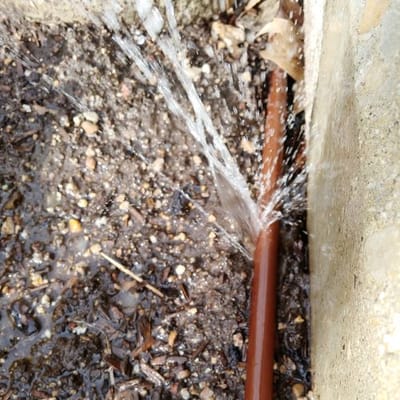
An alarming growing majority of the emergency repairs and full-system retrofits we attend involve dripline that has become blocked, damaged, displaced or no longer provides suitable coverage for the landscape.
Dripline can perform adequately when it is correctly designed, filtered, pressure-regulated, flushed and regularly maintained. Unfortunately, this is rarely what we find in established residential and commercial gardens.
Hidden Irrigation Means Hidden Problems.
Dripline is normally buried beneath soil, mulch and established planting. This makes it difficult to inspect and almost impossible to confirm that every emitter is operating correctly.The controller may complete its normal watering cycle and give no indication that anything is wrong, while individual plants or entire sections of the garden receive little or no water.Common faults include:
Problems Are Often Found Too LateWhen dripline becomes blocked, crushed or kinked, there is usually no visible warning. By the time plants begin wilting, declining or dying, the irrigation fault may have existed for weeks or months. In many cases, the cost of replacing damaged plants becomes greater than the cost of repairing the irrigation system itself. This is one of dripline’s biggest long-term risks: the system can appear to be operating normally while the garden is quietly becoming damaged.
Dripline Does Not Adapt as Gardens Mature
Dripline is installed to suit the garden layout at the time of construction. However, gardens do not remain the same.Plants grow larger, root zones expand, garden beds become denser and plants begin competing for more water.
Existing plants may be removed, new plants added and mulch levels can change significantly over time.The dripline remains fixed in its original position with the same emitter spacing and flow rate.As the garden matures, the original layout may only water a small portion of the developing root zone. Some areas can become overwatered while expanding roots and larger plants remain dry.
Dripline is designed around a new garden. It does not automatically adapt as that garden develops.
Many gardens throughout Melbourne’s Bayside and inner suburbs are built over sandy, free-draining soils.In sandy soil, water moves downward quickly and has limited sideways spread. Instead of evenly wetting the entire garden bed, dripline often creates narrow wetting zones directly beneath each emitter.Longer run times are then required to encourage the individual wetting zones to overlap. However, much of that water may drain below the active root zone before broader coverage is achieved.This can result in:
Repairs Are Invasive and Expensive .Locating a fault in a buried dripline system can require removing mulch, digging through established gardens and exposing long sections of tubing.This work can disturb plants, damage roots and affect the appearance of the garden. Finding and repairing one fault also does not guarantee that other blocked or damaged emitters are not present elsewhere in the system.As the dripline ages, repeated spot repairs can become increasingly uneconomical. In many cases, sections are eventually abandoned or the entire system must be replaced.
A system that appeared inexpensive when first installed can become significantly more costly over its operating life.Why We Prefer Spray IrrigationWhere suitable, Right as Rain Irrigation recommends visible and serviceable spray irrigation.A properly designed spray system applies fine droplets across the garden surface, more closely replicating natural rainfall. Water is distributed across a broader section of the soil, providing more consistent coverage of developing root zones.Spray irrigation also allows every outlet to be inspected while the system is operating.
Coverage problems, blocked nozzles, damaged sprinklers and pressure issues can normally be identified immediately.Sprinklers can be adjusted, moved or changed as the garden develops, making the system easier to maintain and adapt over time.Irrigation Should Mimic Rainfall Plants naturally receive water across the soil surface through rainfall.
Spray irrigation follows this same principle by applying water across a wider area rather than delivering it through isolated, hidden points beneath the ground.This encourages broader moisture distribution, more balanced root development and greater visibility of the system’s actual performance.Irrigation should replicate the way plants naturally receive water: across the soil surface as rainfall—not through isolated, hidden wet spots underground.Our
Recommendation Dripline is not automatically unsuitable for every application. However, based on the increasing number of failed systems we inspect and repair, we generally do not recommend it for established landscaped gardens—particularly in Bayside’s sandy soils.Where practical, we recommend a professionally designed spray system that is visible, adjustable, serviceable and capable of adapting as the landscape matures.A visible irrigation system provides accountability.
A hidden system can continue failing unnoticed.
An alarming growing majority of the emergency repairs and full-system retrofits we attend involve dripline that has become blocked, damaged, displaced or no longer provides suitable coverage for the landscape.
Dripline can perform adequately when it is correctly designed, filtered, pressure-regulated, flushed and regularly maintained. Unfortunately, this is rarely what we find in established residential and commercial gardens.
Hidden Irrigation Means Hidden Problems.
Dripline is normally buried beneath soil, mulch and established planting. This makes it difficult to inspect and almost impossible to confirm that every emitter is operating correctly.The controller may complete its normal watering cycle and give no indication that anything is wrong, while individual plants or entire sections of the garden receive little or no water.Common faults include:
- Blocked or contaminated emitters
- Kinked, crushed or pinched tubing
- Root intrusion
- Damaged fittings and concealed leaks
- Dripline disturbed during gardening or landscaping
- Missing pressure regulation or filtration
- Systems installed without accessible flushing points
- Tubing buried too deeply or covered by years of additional mulch
Problems Are Often Found Too LateWhen dripline becomes blocked, crushed or kinked, there is usually no visible warning. By the time plants begin wilting, declining or dying, the irrigation fault may have existed for weeks or months. In many cases, the cost of replacing damaged plants becomes greater than the cost of repairing the irrigation system itself. This is one of dripline’s biggest long-term risks: the system can appear to be operating normally while the garden is quietly becoming damaged.
Dripline Does Not Adapt as Gardens Mature
Dripline is installed to suit the garden layout at the time of construction. However, gardens do not remain the same.Plants grow larger, root zones expand, garden beds become denser and plants begin competing for more water.
Existing plants may be removed, new plants added and mulch levels can change significantly over time.The dripline remains fixed in its original position with the same emitter spacing and flow rate.As the garden matures, the original layout may only water a small portion of the developing root zone. Some areas can become overwatered while expanding roots and larger plants remain dry.
Dripline is designed around a new garden. It does not automatically adapt as that garden develops.
Many gardens throughout Melbourne’s Bayside and inner suburbs are built over sandy, free-draining soils.In sandy soil, water moves downward quickly and has limited sideways spread. Instead of evenly wetting the entire garden bed, dripline often creates narrow wetting zones directly beneath each emitter.Longer run times are then required to encourage the individual wetting zones to overlap. However, much of that water may drain below the active root zone before broader coverage is achieved.This can result in:
- Dry areas between drip lines
- Uneven moisture across the garden bed
- Excessive deep drainage beneath individual emitters
- Longer watering times
- Poor coverage of expanding root systems
- Higher water use without improved plant health
Repairs Are Invasive and Expensive .Locating a fault in a buried dripline system can require removing mulch, digging through established gardens and exposing long sections of tubing.This work can disturb plants, damage roots and affect the appearance of the garden. Finding and repairing one fault also does not guarantee that other blocked or damaged emitters are not present elsewhere in the system.As the dripline ages, repeated spot repairs can become increasingly uneconomical. In many cases, sections are eventually abandoned or the entire system must be replaced.
A system that appeared inexpensive when first installed can become significantly more costly over its operating life.Why We Prefer Spray IrrigationWhere suitable, Right as Rain Irrigation recommends visible and serviceable spray irrigation.A properly designed spray system applies fine droplets across the garden surface, more closely replicating natural rainfall. Water is distributed across a broader section of the soil, providing more consistent coverage of developing root zones.Spray irrigation also allows every outlet to be inspected while the system is operating.
Coverage problems, blocked nozzles, damaged sprinklers and pressure issues can normally be identified immediately.Sprinklers can be adjusted, moved or changed as the garden develops, making the system easier to maintain and adapt over time.Irrigation Should Mimic Rainfall Plants naturally receive water across the soil surface through rainfall.
Spray irrigation follows this same principle by applying water across a wider area rather than delivering it through isolated, hidden points beneath the ground.This encourages broader moisture distribution, more balanced root development and greater visibility of the system’s actual performance.Irrigation should replicate the way plants naturally receive water: across the soil surface as rainfall—not through isolated, hidden wet spots underground.Our
Recommendation Dripline is not automatically unsuitable for every application. However, based on the increasing number of failed systems we inspect and repair, we generally do not recommend it for established landscaped gardens—particularly in Bayside’s sandy soils.Where practical, we recommend a professionally designed spray system that is visible, adjustable, serviceable and capable of adapting as the landscape matures.A visible irrigation system provides accountability.
A hidden system can continue failing unnoticed.